


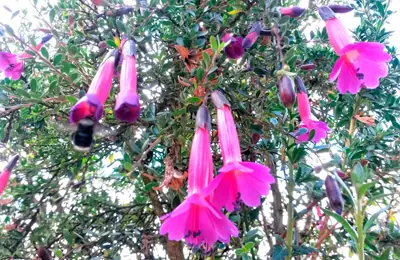
Peru and Bolivia make quite a pair. Many people traveling to South America visit both countries in one trip. And no wonder. If you have a bit more time on your hands, it's a great combination for an ideal journey.
See what connects Peru and Bolivia
In my opinion, Peru and Bolivia have quite a lot in common, but not all similarities will be discussed in this article. Today we focus on one extremely pleasant and interesting similarity, namely a certain plant that is considered the national flower of both Peru and Bolivia.
And what is this mysterious flower?
Have you ever heard of CANTUA BUXIFOLIA, or kantuta or qantu? It's an extremely charming shrub with vivid, contrasting colors that has taken a liking to the Andes in Peru and Bolivia. It grows at altitudes from 1,200 m above sea level to 3,800 m above sea level. Its other names include: ccantu, ccantus, ccantutay, cantu, ccelmo, jantu, flor de inca, jinllo, khantuta, kantut.
See in the video below what colors the kantuta shimmers with
In Bolivia, the kantuta is considered the national flower due to its colors. It turns out that some of its varieties shimmer with three colors, identical to those on the Bolivian flag: red, green, and yellow.
Below you will find one of the beautiful legends about the kantuta, known in Bolivia.
As for Peru, like their neighbors, Peruvians claim that qantu is also their national flower. It is even said that it was the sacred flower of the Incas. The Incas believed, among other things, that this plant keeps water clean for a longer period of time. In the times of the Inca Empire, the kantuta was used in every ceremony and celebration. Also today, in many places in the Andes, this flower is present at many festivals.
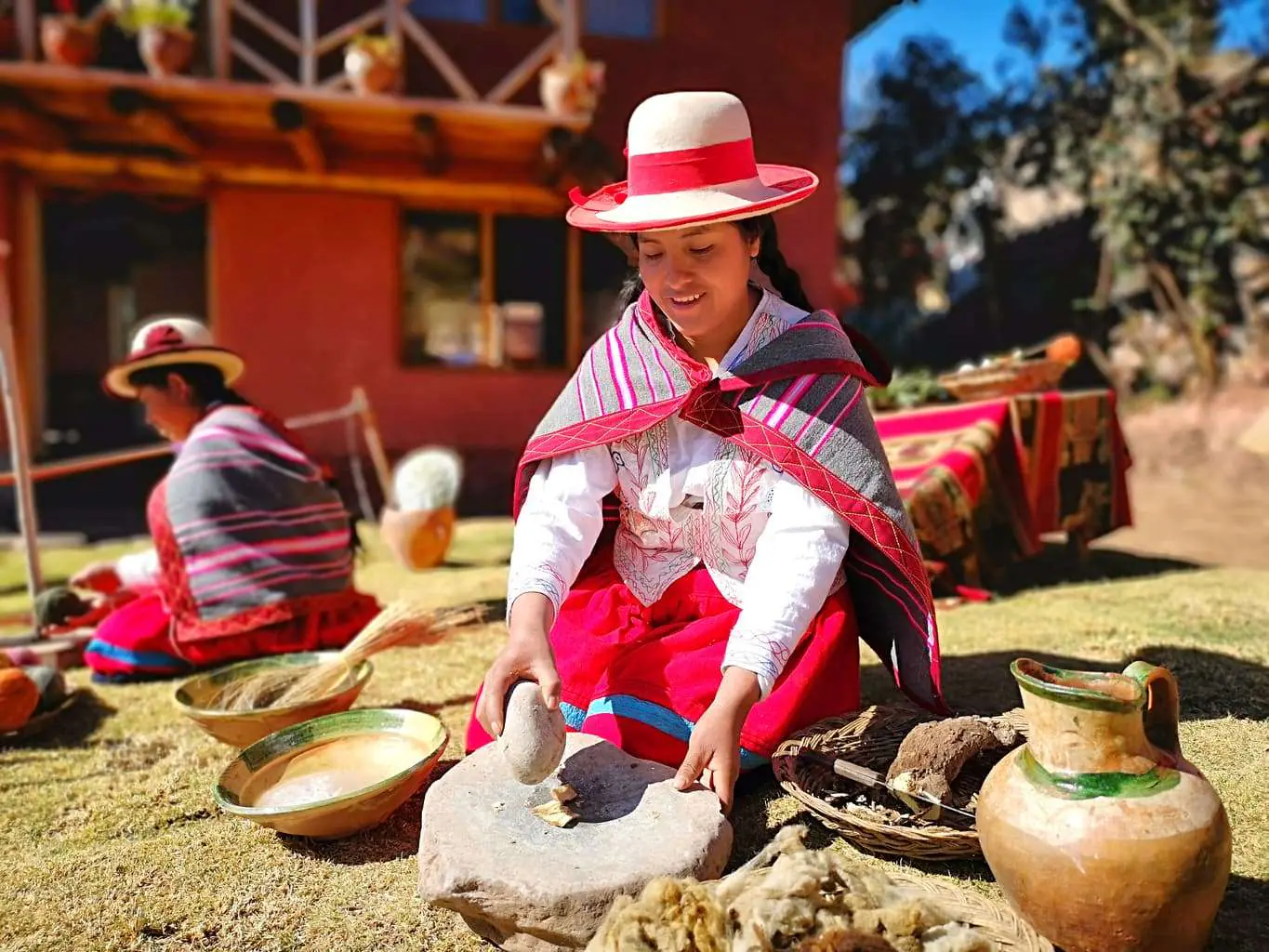
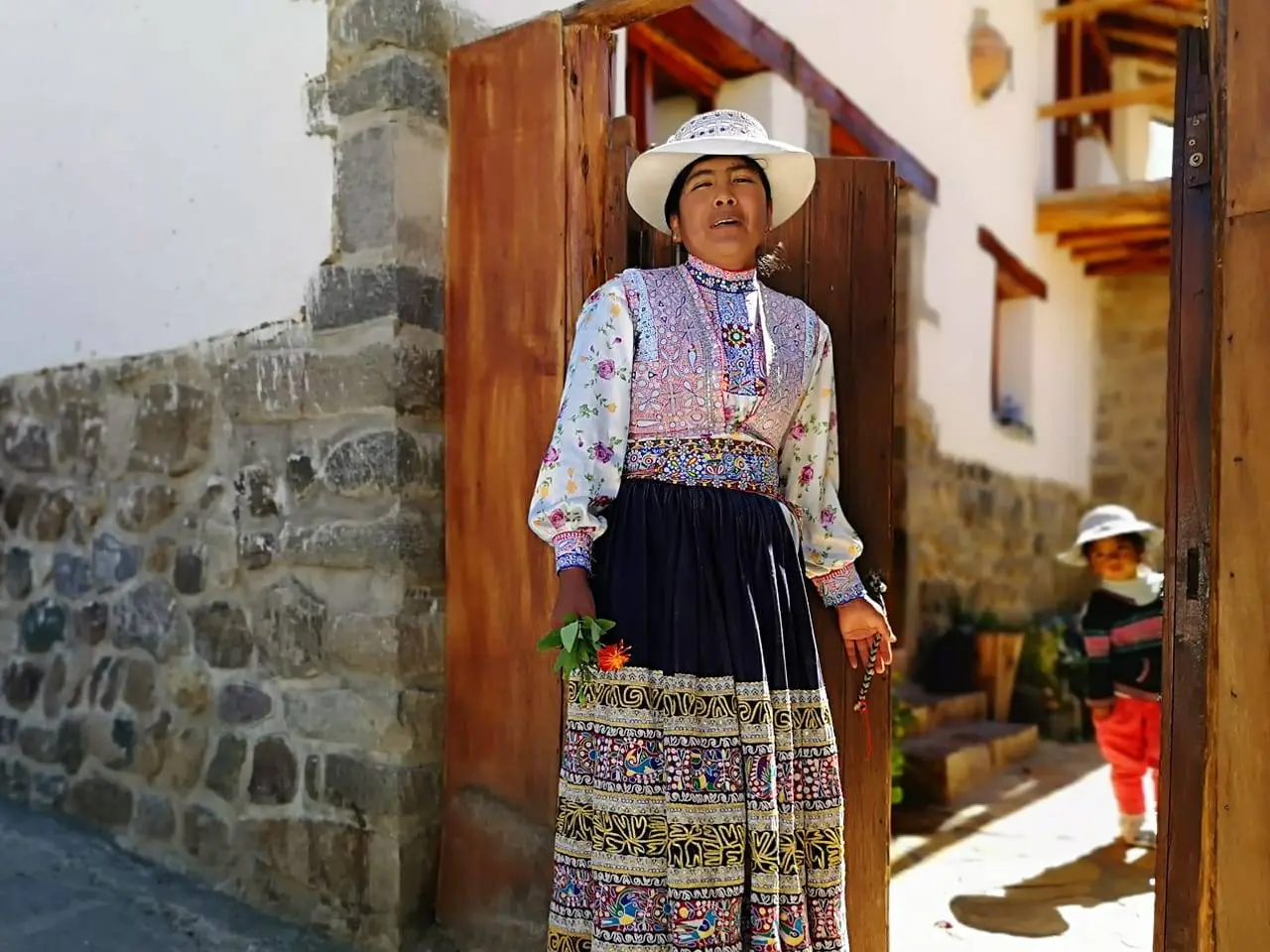
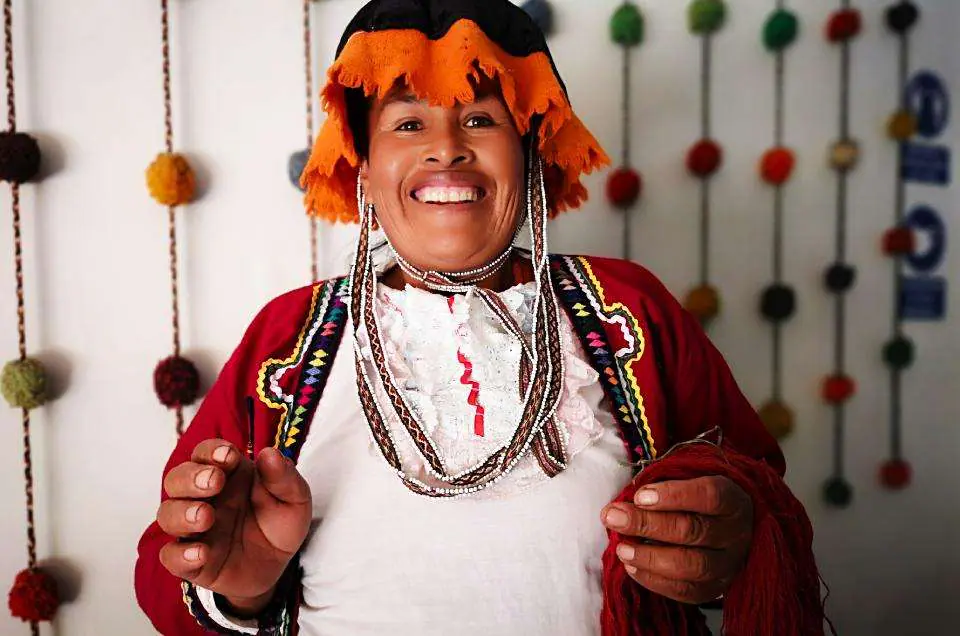
Recently, a very pleasant surprise happened to me in the Patacancha Valley, near the well-known town of Ollantaytambo. When I arrived in the village of Huilloc, where I planned to spend the night, I and my group were welcomed in a joyful way, including by placing necklaces made of kantuta flowers around our necks. These flowers were also placed in front of the entrance to the house where we were to spend the night – as a sign of hospitality. Similar customs can easily be seen, for example, on the Altiplano plateau, including around Puno, on Lake Titicaca. Interestingly, to this day, women from the islands on this lake, the singlielki, maintain the tradition of wearing hats shaped like the cantuta flower. This way, during various celebrations, no one has trouble figuring out which women are single.
Moreover, at the beginning of the 20th century, in the department of Cuzco, the kantuta was also commonly used in funeral ceremonies. It was believed that the water contained inside the plant could quench the thirst of the deceased on their eternal journey.
Medicinal uses of Cantua
Among other things, it helps fight diarrhea. Infusions from its leaves are also used to treat coughs (fresh or dried yellow or purple flowers); jaundice; and in cases of eye inflammation (fresh red flowers, soaked in water for 3-4 hours).
Other interesting uses of Cantua
Thin kantuta branches are used to make high-quality baskets. The stems are used to produce walking sticks, and the leaves are used to obtain a yellow dye used in textile production.
The second national flower of Bolivia
Staying on the subject of flowers, it is also worth mentioning another plant, equally popular in Peru and Bolivia. It is the HELICONIA ROSTRATA from the heliconia family (also known as patujú). It turns out that this is the second national flower of Bolivia. On April 27, 1990, the government of Bolivia passed a law granting national flower status to both the kantuta and the patujú.
This plant also occurs in the following countries: Belize, Guatemala, Costa Rica, Panama, Honduras, Brazil, Colombia, Ecuador, Venezuela, Argentina, Paraguay. A beautiful plant that adds extraordinary variety to any landscape.

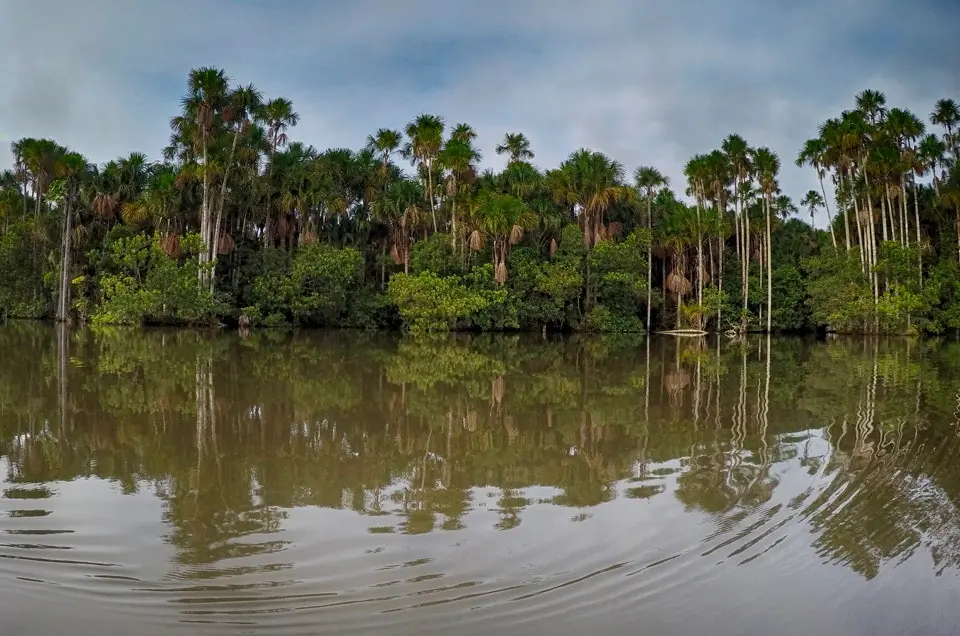
Heliconia rostrata in the Peruvian jungle near Puerto Maldonado
During your stay in Peru and Bolivia, you will surely have many opportunities to admire kantuta and heliconia flowers 🙂