




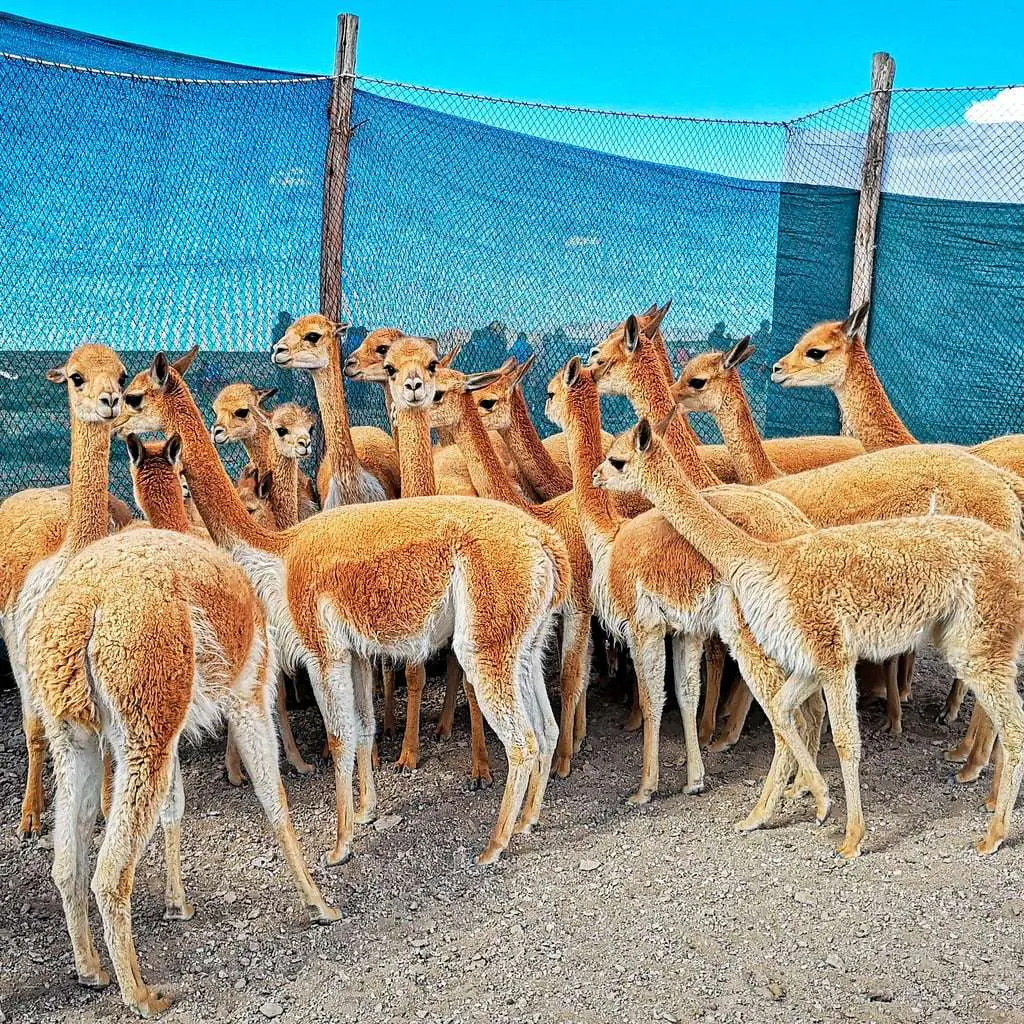
The vicuña is a member of the camelid family and remains undomesticated to this day. What makes it stand out? Besides being simply adorable animals, their wool also draws attention. It is incredibly soft, warm, and therefore among the most valuable and expensive in the world. That's why it's said that vicuñas in Peru are wild gold. Read on to find out where in the world their largest population lives and where in the former land of the Incas you can encounter them.
Vicuñas from Peru, the most precious animals
Vicuñas are found mainly in Peru, Bolivia, Argentina, and Chile. They live in small herds of about six females with one dominant, usually very aggressive, male. They inhabit areas between 3,500 and 4,600 meters above sea level, known as the puna. This region has very harsh conditions, characterized by large daily temperature fluctuations, low humidity, and strong winds. Frosts are common, with temperatures dropping to as low as -20 degrees Celsius. So vicuñas don't have it easy! The young are born during the rainy season, between February and March, which helps the offspring adapt to the harsh climate.
Where in Peru can you encounter vicuñas?
You will certainly see them on the Peruvian coat of arms, next to the cinchona tree. The vicuña symbolizes the country's animal wealth, just as the cinchona tree symbolizes its plant wealth.
During the Inca era, these animals were considered sacred. Their immense importance is reflected in the punishment for poaching: death. Hunting vicuñas at that time was only possible by decree of the ruler and took place every 3 or 4 years. These hunts, aimed at obtaining wool, continue to this day and are called chaku (chaccu). Read more about them in our article El chaccu, the vicuña hunting festival in Peru.
Which country has the most vicuñas in the world?
The largest number of my favorites lives right here in Peru. It is estimated that about 85% of the world's population is found here.
It is believed that during the Tahuantinsuyo Empire (which covered 6 present-day South American countries), the vicuña population may have numbered as many as 2 million. Over several centuries, however, their numbers declined so drastically that the species faced the risk of extinction. For example, in 1964, only about 5,000–10,000 vicuñas were recorded in Peru. Currently, the number of these delightful camelids has increased to over 200,000, which bodes well for the future.
Where in Peru can you encounter vicuñas?
In reality, they are easiest to spot in the Ayacucho region (about 29% of the population). Large groups also occur in Puno, Huancavelica, Junin, Cusco, Arequipa, Apurímac, and Lima. These 8 regions are home to as much as 95% of the total vicuña population inhabiting the former land of the Incas. When traveling, for example, on the route Arequipa – Puno – Arequipa, or on the section leading to Colca Canyon, they will cross your path more than once. The same goes if you head to the Ayacucho region. If you dream of touching a vicuña, I recommend the small animal sanctuary in the Cusco region – there you will have not only vicuñas but also, for example, condors within reach.
So, how do you like these adorable animals?