

There are certain dishes and drinks that, upon arriving in Peru, are worth trying—even essential to try. Not knowing their taste is a bit like giving up on getting to know the local Peruvian vibe. And who knows what the national drink of Peruvians is? Today, more about the most famous local spirits, namely pisco and its cocktail version – pisco sour. Of course, the point is not to encourage anyone to consume alcohol! Those who don't drink shouldn't make exceptions!
Pisco, or Maybe Pisco Sour,
or What Do Peruvians Drink?
Pisco is the national alcohol of Peru. Until recently, it was the subject of numerous disputes between Peruvians and Chileans, who attributed its invention to their country. In the battle that arose over this, Peru ultimately won, and currently no one questions that it was on Peruvian soil that the drink began to be produced. Peruvians are extremely proud of their grape alcohol, to the extent that it has its own national holiday. It falls on the last Sunday of July and is celebrated quite boisterously, especially in larger cities. The National Pisco Day has been celebrated since 1999. In 2017, Pisco was officially recognized as Cultural Heritage of the Nation. You can read about the current situation of pisco on the world market, among others, here.
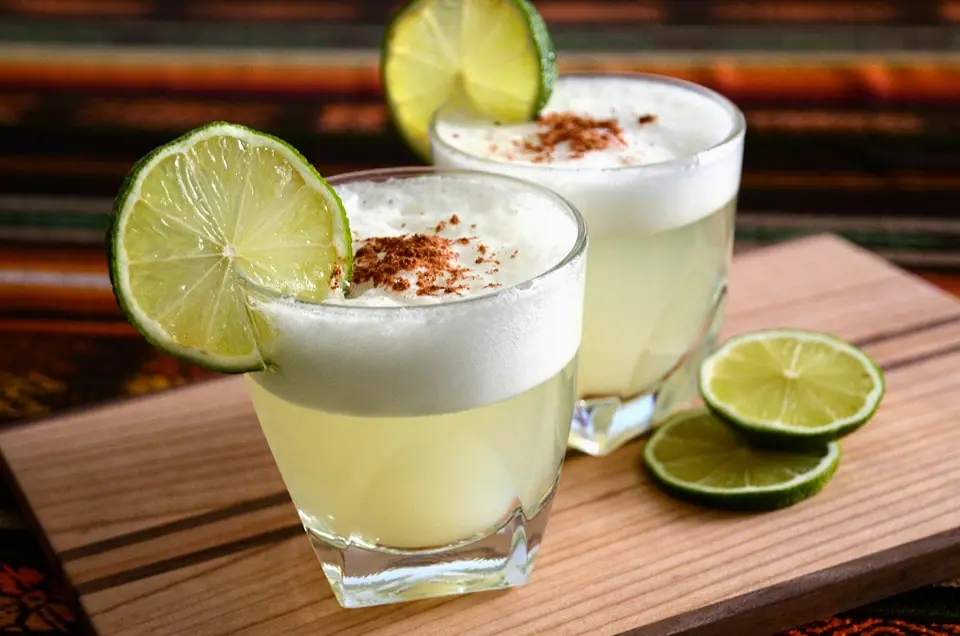
Another equally popular drink is associated with pisco, namely a type of cocktail – pisco sour.
Where was the recipe for pisco sour born?
The history of this sweet drink is linked to the capital of Peru – Lima and the no-longer-existing Morris Bar. It was here that one could initially become acquainted with this original flavor. It was created by an American, Victor Vaughen Morris, who founded the Morris Bar in 1916. However, the first recipe didn't stay secret for long. After the bar closed in 1929, its improved version began to be served at the Hotel Maury. This happened thanks to the bartender – Peruvian Mario Bruiget, who moved here from the Morris Bar to work.
The second most famous place where pisco sour was served was the Hotel Bolivar, located at San Martin Square. This place was once considered a temple of this drink.
Besides the classic pisco sour, you will currently find various versions in many restaurants and bars, including those based on local fruits.
Pisco sour, like pure pisco, also has its own holiday. It has been celebrated since 2004, on the first Saturday of February. Moreover, in 2007 this drink was officially recognized as Cultural Heritage of the Nation.
Is making pisco sour complicated?
No. A moment of patience, the right ingredients, and you can savor Peruvian flavors in any corner of the world. As long as, of course, you find the necessary ingredients – without them, there's no way to make a good pisco sour!
The main ingredients of the cocktail are:
- Pure pisco
- Lemon juice (and here a very important point – the original drink must be made with lime, a small lemon that is extremely sour. Moreover, the whole secret is to add only the first drops of juice to the cocktail. If you squeeze the lemon to the end, the taste will change, because its last drops are simply bitter).
- Jarabe de goma
- Egg white
Also watch a short video that will make it much easier for you to prepare this unique cocktail!
Cheers! ¡Salud! Write in the comments whether you liked pisco sour in Peru?