








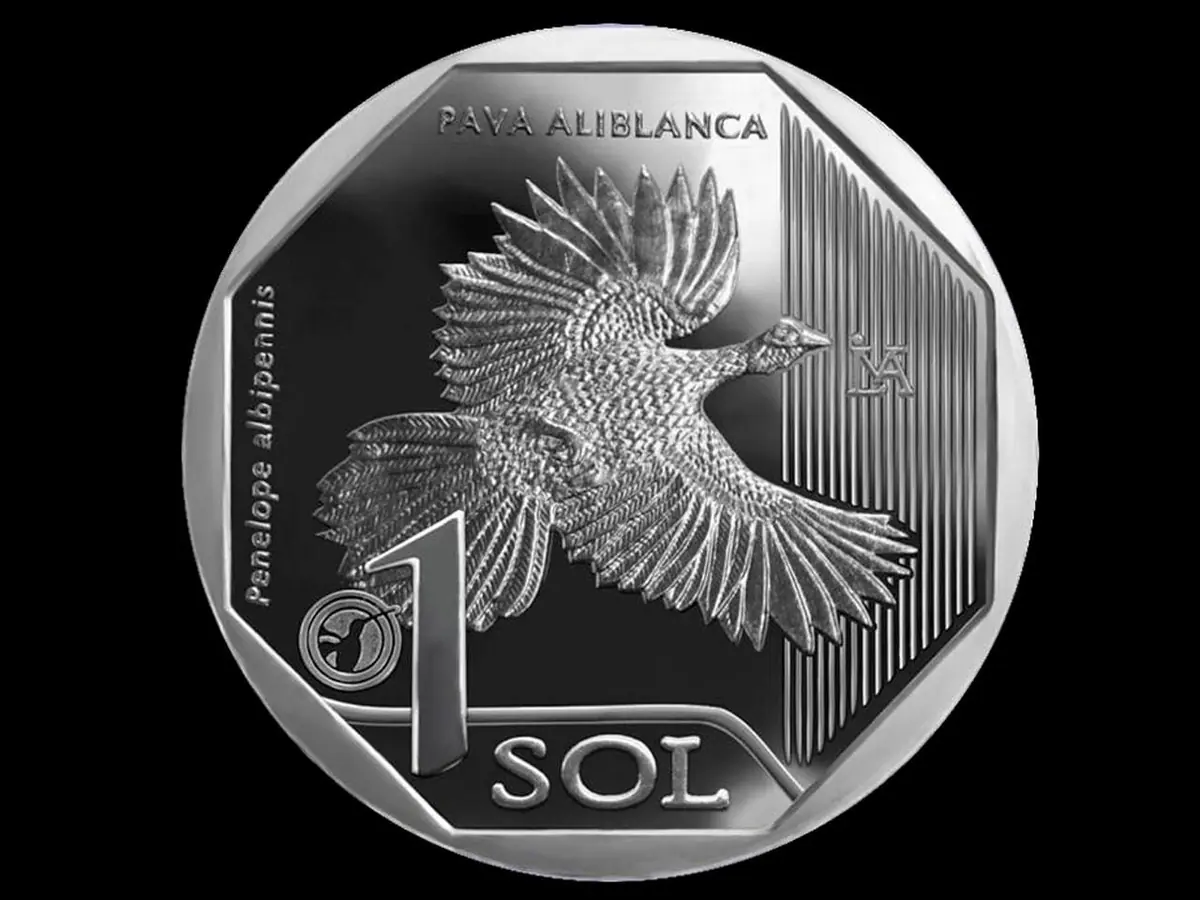
Peruvian currency has an extremely interesting history, so today a bit more on that topic. Besides being coins and banknotes are means of payment, it's worth paying attention to another role they play. They are a kind of language from which much can be read. They define symbols of what is important and significant for the state and its citizens in a given period of the country's functioning. They present both the most important figures of social life, national heroes, great events, places, as well as unique fauna and flora. Coins and banknotes are therefore an extremely important historical factor, preserving a lot of interesting and important information. That's why when traveling around the world, it's worth analyzing the local currency more closely. It is an excellent source of interesting knowledge about a newly discovered country.
Peruvian Currency: What Can You Read from It?
On Peruvian banknotes, you won't find images of rulers like those on Polish banknotes. We will prepare a separate entry for each person and symbol on Peruvian banknotes and coins. Especially since in July 2022, Peru began issuing banknotes with new designs, featuring interesting 20th-century figures and unique fauna and flora. More information about these novelties can also be found on the website of the Central Bank of Peru.
Peruvian Currency and Its Various Names – Do You Know Them?
Peruvian currency has had a rather turbulent history over the centuries, as its name has changed several times. Let's go back for a moment to pre-Hispanic times. Before Christianity appeared in Peru, and with it the concept of one god, the local inhabitants worshipped quite a large group of deities. One of the main ones was the sun. In fact, during the Inca Empire, the Sapa Inca (Inca ruler) considered himself a direct descendant of the sun god. He was worshipped, revered, and prayed to.
The sun motif has persisted in Peruvian consciousness practically to this day, including in many ceremonies and local beliefs. The sun appeared on the first designs of the Peruvian flag, as well as in the country's monetary system. After all, since 1863, almost continuously, with few exceptions, Peruvian currency has been called the sun. Only over the years has this word been expressed in different languages. Sometimes the currency was referred to in Spanish, and sometimes in Quechua.
In the Beginning Was the Sun, That Is "SOL"
For the first time, the currency named "sun," in its Spanish version, that is "SOL," was in circulation in Peru from 1863 to 1897. It was introduced during the presidency of Miguel de San Román. In March 1897, the system was changed, giving the monetary unit the name "Libra Peruana de Oro," which means "Peruvian golden pound." However, this did not last long. The coin named sun returned again in the years 1931–1985, also in the Spanish version, though it was then called "SOL DE ORO" ("golden sun").
For a While It Was the Sun, but in Another Language, That Is "INTI"
From 1985 to 1991, the currency "INTI" was put into circulation. The word "inti" also means "sun," but in the Quechua language. Unfortunately, this name was associated badly, even very badly, by Peruvians, mainly with the socio-economic crisis that the country struggled with in the 1980s and the first decade of the 1990s. Hence, in the years 1991–2015, the Spanish version of the word sun was returned to, this time as "NUEVO SOL" ("new sun").
But that's not the end of the changes!
As you can see, Peruvians couldn't decide on one long-term solution. And so, on December 15, 2015, the name from the 18th century was restored. The word "NUEVO" was removed from the pre-2015 name, and thus we have "SOL" again. And so it is to this day.
How Is the Peruvian Currency Abbreviated and What Denominations Are Currently Available?
The symbol of Polish currency is "ZŁ," while the Peruvian one is "S/," currently without a dot at the end! The one officially in force until 2015, when "NUEVO SOL" was in circulation, had a slightly different abbreviation, as it ended with a dot, looking like this: "S /.".
Peru currently has five banknotes in circulation with denominations of 10, 20, 50, 100, and 200 S/. For comparison, in Poland there is also a 500 ZŁ banknote. It would seem that in the former Inca country, it wouldn't have much use in everyday life, since even the 200 S/ note is rarely used here. But who knows, maybe one will be introduced here soon.
And why are the highest-denomination banknotes reluctantly used in everyday life in Peru? People are simply afraid of counterfeits. Meanwhile, for an average Peruvian, a worthless fake, that is, losing, for example, 200 S/, is, to put it mildly, a huge loss. Generally, in smaller shops, and especially in taxis, you won't be able to break or pay with those 200 S/ notes. Peruvians are also reluctant to use 100 S/ banknotes in such places. In that reality, in everyday life, 10 and 20 S/ banknotes work best. And it's worth having as many of those as possible during your trip.
You can also read about Peruvian currency on the official website of the Central Bank of Peru here.
If you would like to travel through Peru discovering the curiosities hidden in Peruvian coins and banknotes, be sure to follow our blog. In upcoming entries, we will guide you through the Peruvian world by means of the local currency. If you are interested in general information about Peru, we invite you to read the article here, and to ask questions if you have any doubts.