Most tourists visiting Peru focus on the southern part of the country, and less often choose to head north in the footsteps of ancient cultures such as the Moche and Chimú. That's a shame, because these cultures left behind many interesting places full of fascinating history, mysteries, and traditions—some of which are still practiced today.

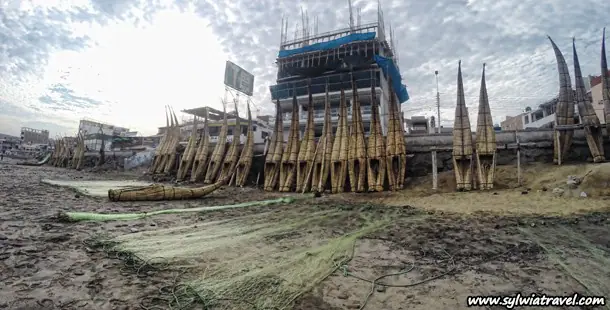
There are many examples of these traditions being kept alive. One that generates enormous interest is the method of fishing using a special type of boat—or rather, little boats—known as los caballitos de totora. These fishing vessels are unique not only because of their appearance, but above all because they have been used in Peru in an unchanged form for around 3,000 years. They are a symbol of the country, and especially of the Trujillo region. It is mainly in this part of Peru that local fishermen, upholding the tradition of using los caballitos de totora, set out every day on the Pacific Ocean in their reed boats.

The original name of the caballito de totora, used during the time of the Moche and Chimú cultures, was "tup." It changed in the 15th century after the Spanish arrived in Peru, who added the word for horse (caballito) to the original sound. Apart from the changed name, the reed boats and their construction remain identical to how they were thousands of years ago.
How to build an el caballito de totora?
It turns out that the matter is quite simple, at least for specialists in this field. Building a new boat, as a fisherman in Huanchaco revealed to me, takes only 2-3 hours.

El Caballito de totora is built from a plant called Totora (Scirpus californicus), which is a type of reed. This plant can be found in the wetlands along the Pacific Ocean. If you go, for example, to the town of Huanchaco, about 30 minutes by bus from Trujillo, you will have the opportunity to see this building material with your own eyes.

In the very center of the town, especially for tourists eager to learn about caballitos de totora, two small reed plots have been created.

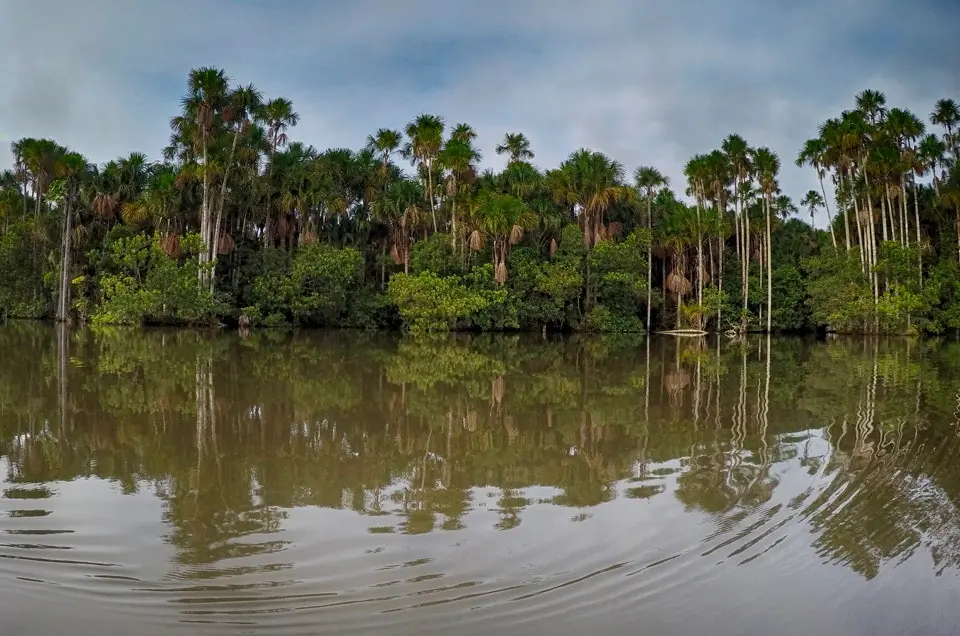
Larger quantities of totora are found a bit outside the town. If you have the time and desire to observe the plant in its natural environment, you must take a much longer walk along the coast to a place called Pantanos de Huanchaco. It is an ecological reserve from which the Mochica and Chimu cultures harvested the raw material to build caballitos de totora. Currently, it is the fishermen of Huanchaco who extract the reed from this place, from which they construct their fishing boats at an almost express pace.
The technique of building reed vessels is passed down from generation to generation. Of course, certain rules apply: the bow is thin and curved upwards, while the stern is wider, intended for transporting various things, including fish. These boats reach a length of up to about 4 meters and weigh from 40 to 50 kg.
Depending on how and how often they are used, caballitos de totora serve fishermen for 3 to 7 weeks.
Is steering a reed boat easy?
It is certainly not easy for those who come into contact with caballitos de totora for the first time. Steering the boat requires some skill, a strong arm from the driver, and a lot of balance. For comparison, it is much easier to maneuver a kayak.
Anyone eager for a ride in a caballito de totora can treat themselves to such an adventure primarily in the town of Huanchaco, located near Trujillo. For about 10-15 soles, for around 15-20 minutes, you can feel like a Peruvian fisherman and see how these boats function and behave on the water.
Caballitos de totora – more than just fishing boats
Due to their lightness, los caballitos de totora are also used today for surfing. Water sports enthusiasts, especially in Peru, will have the opportunity to swap their surfboard for a reed boat and try to catch a few good waves in a rather unusual and certainly unique way.