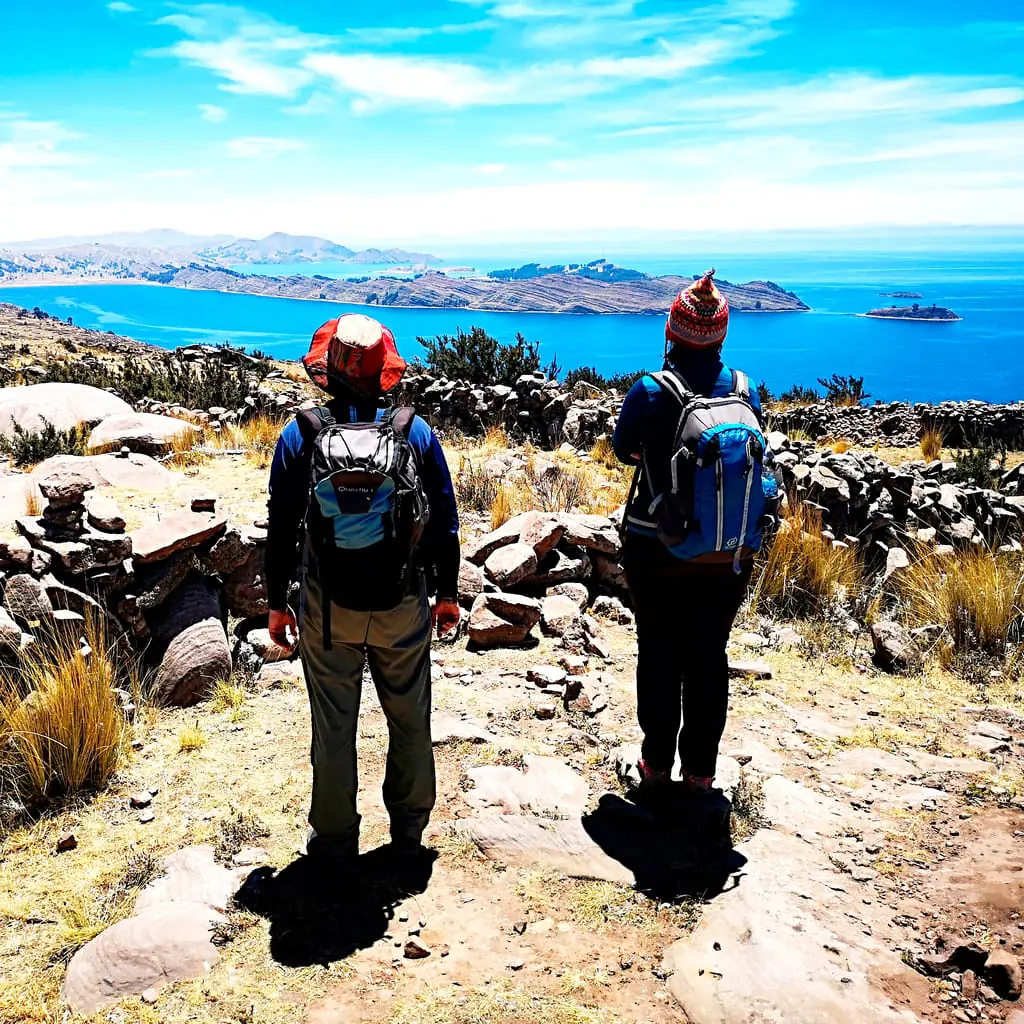






Lake Titicaca facts is a series of posts dedicated to the lake itself and its immediate surroundings. This is a very interesting part of Peru that the average tourist typically explores only to a very limited extent. Hence our idea to bring you a little closer to this region and show what it hides.
Lake Titicaca general facts – where is it and how to get there?
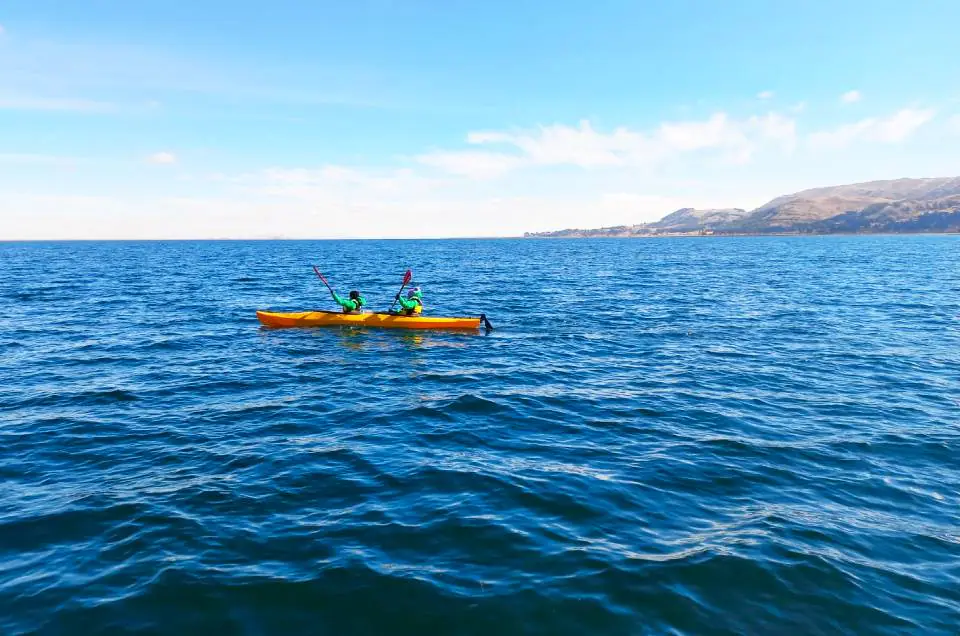
Lake Titicaca is located in the Puno region and, as it happens, it is the hallmark of this part of the country.
The easiest way to reach the Titicaca area is by land. Driving from Cusco to Puno takes about 6-7 hours without stopping. Arequipa is slightly closer to Puno, but overall the travel time is similar. For the Puno-Arequipa section, it's nice to take a short detour off the main road towards Colca Canyon.
Near Titicaca, exactly an hour's drive from Puno, in the city of Juliaca, there is a local airport. So it is also possible to reach these areas quickly by plane. Flights are available from both Cusco and Lima.
The border separating Peru and Bolivia runs through Lake Titicaca. It is assumed that a slightly larger part of the lake lies on the Peruvian side. There have been disputes between the two countries in this regard. Because, of course, everyone would like to have a little more of the lake for their own needs.
Lake Titicaca biological facts – inhabitants of Lake Titicaca you may not know yet
In this post we would like to introduce you to one of the lake's inhabitants, extremely rare and at the same time little known.
Specifically, it's a certain frog called "rana gigante" (giant frog). It is said that the rana gigante (telmatobius culeus) is the largest frog in the world. It is also one of the rarest species. Moreover, it lives in the highest navigable lake on the globe, at over 3,800 m above sea level, which is Lake Titicaca itself.
For some, the Titicaca frog is the ugliest specimen of all living creatures, for others the most beautiful. What interesting things can we say about it?
It reaches a body length of up to 14-15 centimeters, and with its legs even up to half a meter. It can weigh up to about 1 kilogram. In the 1970s, a frog was recorded measuring 50 centimeters and weighing 1 kilogram. Thanks to its long hind legs, it can move freely underwater and hunt the species that are part of its diet.
Unfortunately, due to human activity, the rana gigante has been critically endangered since at least 2004. Over the past fifteen years, the population of rana gigante in the wild has dropped by as much as 80%. What is the cause?
Climate change, pollution of the lake, the introduction of aggressive trout, as well as mass killing for consumption are to blame. Yes, yes. The inhabitants of Peru and Bolivia have made our protagonist a local delicacy, and they also use it for medical purposes. Today, both in Bolivia and Peru, its extraction and trade are prohibited. Nevertheless, in some areas of both countries they are still sold.
Rana gigante and Peru's currency – how did Lake Titicaca end up on a coin?
The rana gigante was commemorated by the Central Reserve Bank of Peru on the tenth and last coin of the numismatic series "Endangered Wild Fauna of Peru". You can observe what this frog looks like in its natural environment, among others, in this video Moneda alusiva a la Rana Gigante del Titicaca. We will tell you about other extremely valuable species that have been featured on Peruvian coins from the above-mentioned series in future posts. For those interested, we leave a link to the Reserve Bank's website, where you can find photos of these coins and the protagonists of each. And for those interested in facts about Peruvian currency, we refer you to our post here.
Lake Titicaca facts straight from Poland – meet the frog from Peru in Wrocław
It is worth mentioning that the rana gigante has also connected Poland and Peru. Since 2019, you can admire it also in our country, specifically at the Wrocław Zoo. This center has a large number of different frog species, about 42 in total, and recently this group has been joined by frogs proudly representing Lake Titicaca. There are several of them to admire at the Wrocław Zoo. More on this can be found in the Wrocław newspaper here.
More facts, in which Lake Titicaca will play the main role, coming soon. Write us a comment about what you would like to learn about Lake Titicaca from our blog. Warm regards!