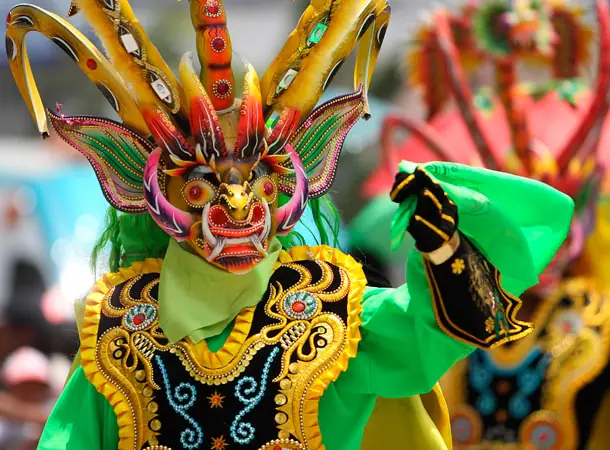
Throughout February, numerous festivals take place in Peru. It is an exceptionally carnival-like month in the former Inca Empire, a time of celebration across the country! Anyone who wishes to enrich their trip will have many opportunities to do so during this period. Participating in local festivities is one of the easiest ways to get to know new customs, traditions, and culture inside out! Which biggest festivals in Peru are worth experiencing? We recommend, among others, the Fiesta de la Virgen de la Candelaria in Puno.
The Fiesta de la Virgen de la Candelaria, the feast in honor of the Virgin of Candelaria – patroness of Puno, begins on January 29 and ends on February 6, with the main part of the celebrations falling on February 2. At that time, the whole city is very colorful, full of dance and song. You can find details of the 2017 celebrations here.
About 40,000 dancers and musicians take part in the festivities. The main participants are Quechua and Aymara speakers from rural and urban ethnic areas of the Puno region. But not only! Many people who have emigrated from the city and its surroundings keep their traditions alive and return to their hometowns every year to present new dance and music arrangements, as well as new, original costumes. The festival is a combination of tradition and knowledge of dance technique, music, and the making of masks and costumes. These traditions are passed down from generation to generation. Preparations for the festival last all year, including organizing music and choreography rehearsals and creating workshops where the characteristic masks are produced.
The feast in honor of the Virgin of Candelaria is a blend of Catholic faith with the religions, culture, and traditions of the Andean people. This celebration is closely linked to the festival of Pachamama "Mother Earth," who is still revered with great solemnity and respect by the local people in the Andes to this day.
Fiesta de la Virgen de la Candelaria – on the UNESCO list
The Fiesta de la Virgen de la Candelaria is one of eight cultural events in Peru inscribed on UNESCO's Representative List of the Intangible Cultural Heritage of Humanity. Besides this festival, the list also includes:
- The oral heritage and cultural expressions of the Zápara people – inscribed jointly with Ecuador
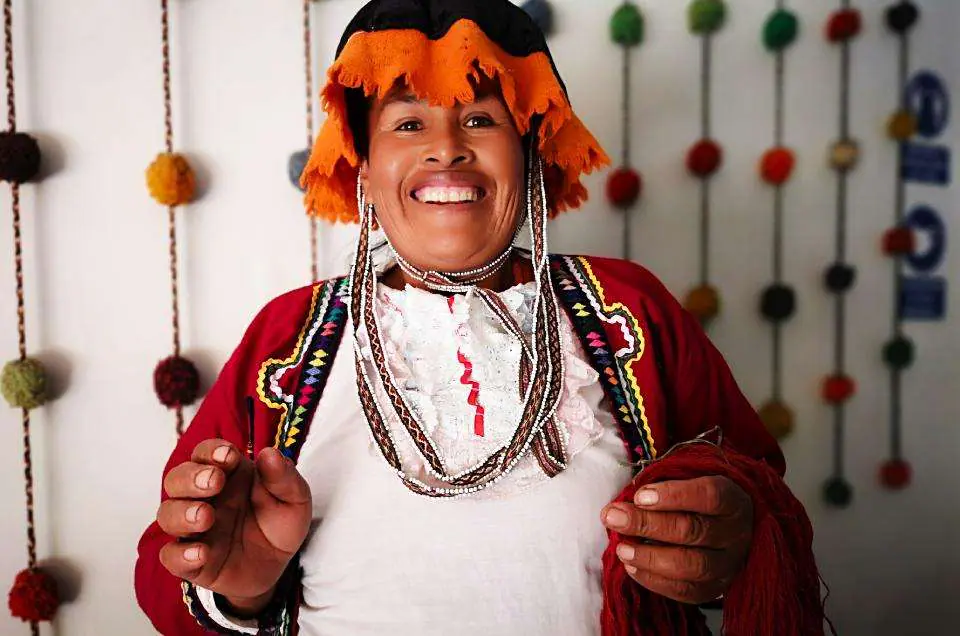
- The art of weaving on the island of Taquile
- Huaconada – a ritual dance from the Mito region
- The scissors dance
- Pilgrimage to the sanctuary of Quyllur Rit'i
- Customs and traditions associated with the annual renewal of the Inca rope bridge Q'eswachaka
- Wititi – a dance from Colca Canyon
UNESCO Representative List of the Intangible Cultural Heritage of Humanity
"Intangible cultural heritage means the practices, representations, expressions, knowledge, skills – as well as the instruments, objects, artefacts and cultural spaces associated therewith – that communities, groups and, in some cases, individuals recognize as part of their cultural heritage. This intangible cultural heritage, transmitted from generation to generation, is constantly recreated by communities and groups in response to their environment, their interaction with nature and their history, and provides them with a sense of identity and continuity" – from www.unesco.pl
Festivals in Peru – planning a trip to the former Inca Empire at this time – REMEMBER!
- It will be very colorful, original, unusual, but also crowded
- It is worth booking accommodation in advance
- It is worth booking bus tickets in advance
- You should be a bit more cautious about potential pickpockets and people who have been drinking alcohol
Would you like to spice up your trip? Consider combining your journey with one of the more famous festivals in Peru. If you don't know how to go about it, get in touch with us. During the trips we organize, we gladly take part in fragments of the most beautiful Peruvian holidays and celebrations!